
Facts about insects
Bugs and insects are not the same, although a bug is a type of insect.
Real bugs have a mouth shaped like a straw called a stylet that they use to suck juices from plants.
Real bugs have front wings that are thickened and colored near where they are attached to the insect's body, and are clearer and thinner towards the hind end of the wing. The backs wings are usually clear and are tucked underneath the front wings. Insects are inverterbrates, this means they are animals without backbones.
Insects have a hard skeleton that protects and supports their body. This is called an exoskeleton. As they grow, they get too big for their exoskeleton and have to discard it and grow a new one. Some insects will eat their old skeleton. Spiders are not insects, because they have eight legs and only two main body segments.
Can insects hear?
Yes, most of them can hear. Insects use sounds to communicate with other insects, and to navigate their environment. Some even listen to the sounds of predators in order to avoid being eaten. Sound is produced by vibration.
How many parts to an insects body?
There are 3 parts to an insect's body. The head which has the antennae, mouth and eyes. The middle piece is called the thorax, which is where the wings and legs are. Insects have 6 legs. The last piece is the abdomen which is where all their organs are, like their stomach.
What do insects eat?
Some insects drink nectar, some suck up liquid and others chew leaves and plants. Some even suck blood or plant juices.
Are insects our friends?
People think insects are pests because they can bite, sting and spread diseases. They also eat food that people grow to eat. But without them we would run out of food because they pollinate flowers which we need to help our food grow.
Why do bees die after they have stung someone?
The stinger of the bee is made up of two parts, which are lined with barbs, like fishhooks. When the bee stings you, it presses the stinger insideyour skin, but is not able to pull it back, mainly because of the barbs, so it has to leave the stinger inside your skin. When this happens, it leaves behind part of its digestive tract, muscles and nerves. The bee can't live without these things so it dies.
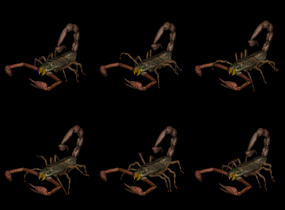
Scorpions have a stinger at the end of their tail and it injects a paralyzing poison into their prey. They use their pincer-like claws to grab their prey. Scorpions sting, they do not bite. Did you know that scorpion mothers can give birth to about 35 babies at the same time? Scorpions don't drink water because they get all their fluids through eathing their food.lick here to start typing your text

Facts about ladybugs
In the summer, ladybugs live in shrubs, branches, and flowers. During autumn some will all crawl to the same place to hibernate, or the base of a tree, along a fence row, under a fallen tree, or under a rock. Ladybugs hibernate in winter under leaves that protect them from the cold. Ladybugs will eat about 5000 aphids in their life time. Female ladybugs will lay about 1000 eggs in their life time. The life cycle of the ladybug is between four to six weeks. Ladybugs aren't dopn't have their spots when they hatch.
The huhu grub is native to New Zealand. Huhu beetle larvae are commonly known as huhu grubs. They hatch from eggs deposited under bark or in crevices in rotten wood. For two to three years they live in cavities they have eaten into the wood. After their pupae stage, the huhu grub emerges as a flying adult huhu beetle! Adult huhu grubs do not eat and live for 2 weeks only. Apparently, they are very tasty. Yummmmm.
We live in New Zealand and are really interested in bugs in our country. Do you know how many types of insects there are in New Zealand?
According to "Manaaki Whenua - Landcare Research", there are about 240 types of insects in New Zealand. If you don't believe us, you can count them below. Have a look at their website, it has interesting information and cool pictures. http://www.landcareresearch.co.nz
American Cockroach
Caterpillar of North Island Lichen Moth
Field Grasshopper (long antennae)
Green vegetable bug (immature)
Gum leaf skeletoniser caterpillar
Ladybird larva with wax excretions
Light Brown Apple Moth, leafroller caterpillar
New Zealand praying mantis eggcase
Painted apple moth caterpillar
Passionvine hopper egg scars in twig
Rose scale, an example of an armoured scale
Soft brown scale, an example of a soft scale
South African praying mantis eggcase
Striped lax beetle
Tomato fruitworm (caterpillar)
Tropical armyworm (caterpillar)
White spotted tussock moth (male)
White spotted tussock moth caterpillar
